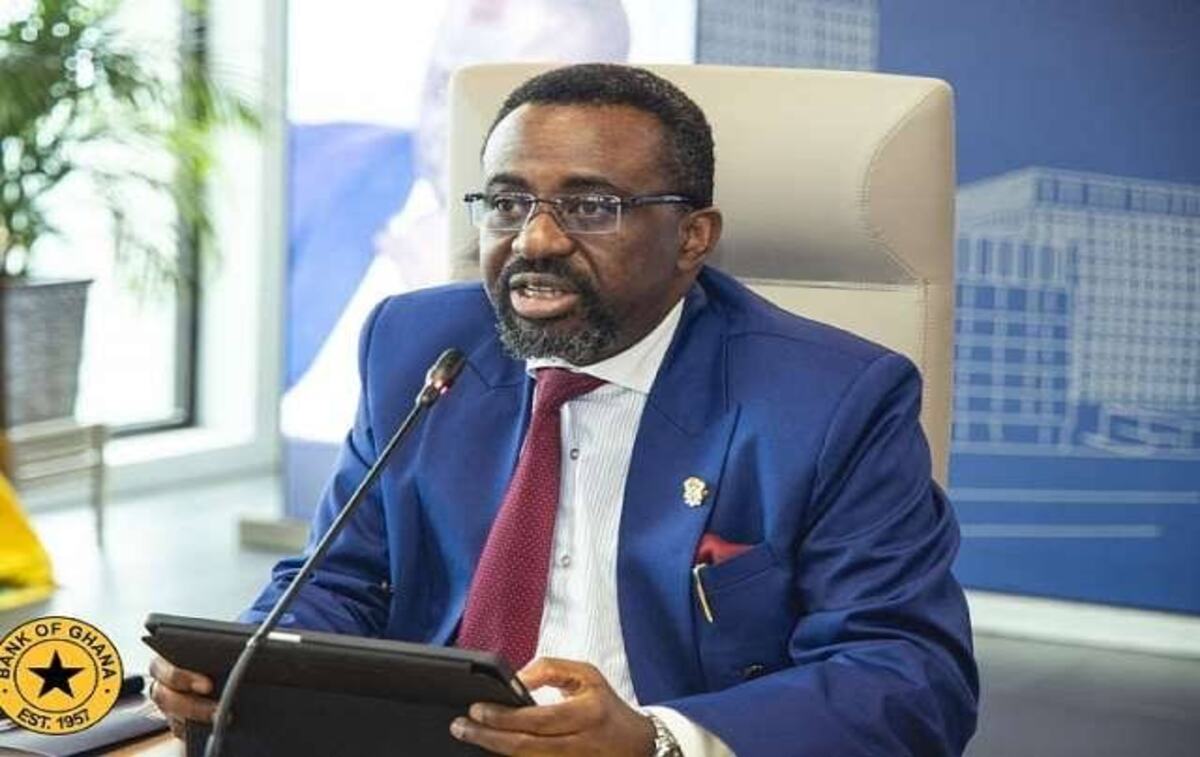
Bank of Ghana (BoG) Governor Dr Johnson Pandit Asiama has said Ghana’s financial system is undergoing a major transformation, with digital platforms, payment networks and technology providers becoming as important as traditional banks.
He said the financial architecture the central bank regulates is no longer centred only on banks, balance sheets and physical banking halls, but is increasingly shaped by digital financial services and new forms of financial intermediation.
Speaking at the Financial Architecture Summit 2026 organised by the National Banking College (NBC), Dr Asiama said the changing landscape presents significant opportunities but also introduces new risks that can spread rapidly across the financial system.
“We can no longer safeguard stability by looking only at individual institutions. In a digital financial system, stability depends not only on the strength of institutions, but also on the strength of the connections between them,” he said.
Technology transforming financial services
Dr Asiama said advances in technology, changing consumer expectations and evolving business models are redefining how financial services are designed, delivered and supervised globally.
He noted that the traditional lines separating banks, technology companies, payment service providers and telecommunications firms are becoming increasingly blurred.
According to him, digital platforms now enable real-time transactions, while artificial intelligence is transforming areas such as credit assessment and fraud detection.
“Consumers increasingly expect financial services to be seamless, secure, personalised and available at the touch of a button,” he said.
He, however, cautioned that regulators must focus not only on technological innovations but also on the new dependencies and risks they create within the financial ecosystem.
Ghana’s digital finance growth
The BoG Governor highlighted Ghana’s progress in digital finance, describing the country as one of Africa’s leading digital financial ecosystems.
He disclosed that in April 2026 alone, Ghanaians conducted mobile money transactions worth GH¢493.2 billion across 967 million transactions.
He added that 26 million mobile money accounts were active during the period, supported by 534,000 active agents, while GhIPSS Instant Pay processed an additional GH¢79 billion.
Dr Asiama said the expansion of mobile money, payment interoperability and digital financial services has changed how Ghanaians access and interact with financial services.
However, he warned that increased digitisation has also created new challenges, including cyber threats, digital fraud, operational risks and concerns surrounding third-party technology providers, cloud infrastructure and artificial intelligence.
BoG adopts new regulatory approach
Dr Asiama said the evolving financial environment requires a shift in how central banks regulate and supervise the sector.
He explained that the BoG is moving beyond traditional institutional supervision to focus on the resilience of the broader financial ecosystem.
“Our regulatory philosophy is therefore evolving from one that focuses primarily on institutional supervision to one that increasingly considers ecosystem resilience,” he said.
He noted that a financially sound bank could still face vulnerabilities if critical technology providers, payment networks or telecommunications systems fail.
The Governor pointed to the revised Cyber and Information Security Directive launched in March as part of efforts to strengthen resilience in Ghana’s financial sector.
He said the directive introduces stronger governance requirements for cybersecurity, artificial intelligence use, cloud technology adoption and data protection.
Balancing innovation and stability
Dr Asiama said the BoG’s objective is not to restrict innovation but to ensure that technological advancement takes place within a framework that protects consumers and maintains confidence in the financial system.
“Innovation should flourish within a regulatory framework that promotes trust, protects consumers, preserves market integrity and safeguards financial stability,” he said.
He added that the central bank will continue investing in Ghana’s payment infrastructure to create a secure, efficient and inclusive financial ecosystem capable of supporting economic growth.