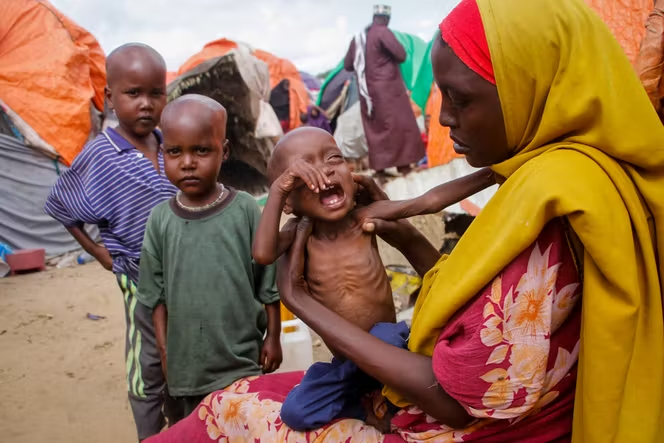
Parts of southern Somalia are at risk of famine, two global food security monitors warned on Thursday, with one district reaching hunger levels not seen in the country since 2022.
The warning comes as Somalia, already one of the world’s most food-insecure countries due to recurring drought, conflict and poverty, faces worsening food shortages and declining humanitarian support.
According to a report by the U.N.-backed Integrated Food Security Phase Classification (IPC), more than 37% of young children in Burhakaba District in Somalia’s southern Bay Region are suffering from acute malnutrition.
The district, which has an estimated population of around 200,000 people, was identified as being at risk of famine under a worst-case scenario involving failed seasonal rains, rising food prices and insufficient humanitarian assistance.
“The IPC analysis found Burhakaba District to be at risk of Famine under a plausible worst-case scenario of failing Gu season rains, soaring food prices and below expected delivery of humanitarian food security assistance,” the report said.
Somalia last experienced famine in 2011, when an estimated 250,000 people died. The country also came close to famine conditions in 2017 and again in 2022.
Famine is officially declared when at least 20% of households face extreme food shortages, more than 30% of children suffer acute malnutrition, and at least two people per 10,000 die daily from hunger-related causes.
Famine Early Warning Systems Network (FEWS NET), a U.S.-funded hunger monitoring agency, said its most likely forecast assumed seasonal rains would improve enough to stabilise conditions temporarily.
However, the agency warned that another failed harvest caused by poor rainfall could rapidly worsen the situation across agro-pastoral communities in the Bay, Bakool and Gedo regions.
“If the harvest fails, Famine could rapidly emerge in these areas,” FEWS NET spokesperson Hannah Button said in a statement.
The IPC report estimated that around 6 million Somalis are currently facing crisis levels of food insecurity or worse. While slightly lower than the 6.5 million recorded in February, the figure remains above earlier projections due to worse-than-expected rainfall.
The crisis has been compounded by global reductions in foreign aid, including cuts by the United States, which have significantly reduced humanitarian support to Somalia.
Although food assistance increased during the April to June period, the IPC said aid programmes were reaching only about 12% of people facing crisis-level hunger or worse.
U.N. data showed humanitarian funding for Somalia stood at $160 million in 2026, down sharply from $531 million last year and far below the $2.38 billion mobilised during the 2022 drought crisis.
“Somalia risks becoming one of the first major crises of the post-aid era: a place where needs are growing, survival is becoming more expensive, and the response is shrinking,” said Daud Jiran, Somalia country director for Mercy Corps.