

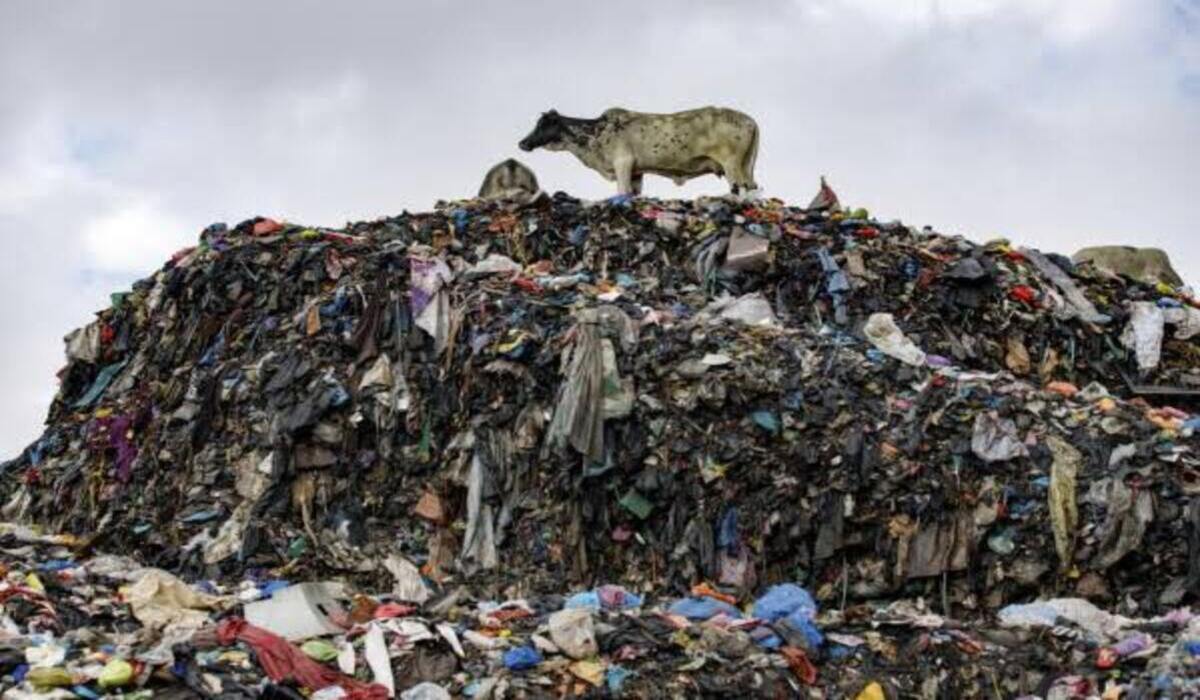
Ghana loses more than GH¢6.2 billion annually through healthcare costs and lost productivity linked to poor waste management and sanitation, according to a policy brief by the Institute of Statistical, Social and Economic Research (ISSER) of the University of Ghana.
The researchers are calling for increased government investment in sanitation, warning that preventable diseases associated with poor waste management cost the country about 31.9 million work and school days every year.
The February 2026 ISSER policy brief estimates that the country incurs about GH¢5.58 billion in direct medical expenses and a further GH¢650 million in lost productivity annually due to inadequate waste management.
The burden includes preventable diseases such as malaria, cholera and typhoid.
ISSER also estimates that sanitation-related illnesses contribute to about 107,222 premature deaths annually.
The researchers say the economic losses far exceed current public spending on waste management and sanitation.
According to the report, Metropolitan, Municipal and District Assemblies (MMDAs) collectively spent approximately GH¢180.2 million on waste management and sanitation, compared with the more than GH¢6.2 billion lost annually through health and productivity costs.
ISSER says the disparity highlights the need to treat sanitation as an economic investment rather than simply a social or environmental responsibility.
The researchers attribute the growing sanitation challenge to rapid urbanisation, population growth and changing consumption patterns, which are increasing the volume of solid and liquid waste generated across the country. The report recommends increased public investment in sanitation, drainage and environmental health, with priority given to interventions with high health returns.
These include improved faecal sludge management and the elimination of open refuse dumps that contribute to the spread of disease.
ISSER also recommends directing capital investment towards high-risk urban and peri-urban communities, including densely populated slums, flood-prone neighbourhoods and underserved areas.
The report estimates that current average investment in waste management is about GH¢38.78 per tonne of waste, compared with a GH¢1,028 per-tonne benchmark used by ISSER for lower-middle-income countries under its best-case scenario.
The researchers are therefore calling for sanitation and its health and economic benefits to be incorporated into national economic planning, government budgets and medium-term expenditure frameworks.
ISSER says increased investment in sanitation and drainage could reduce disease, premature deaths and productivity losses while addressing the disproportionate burden faced by vulnerable communities.


