


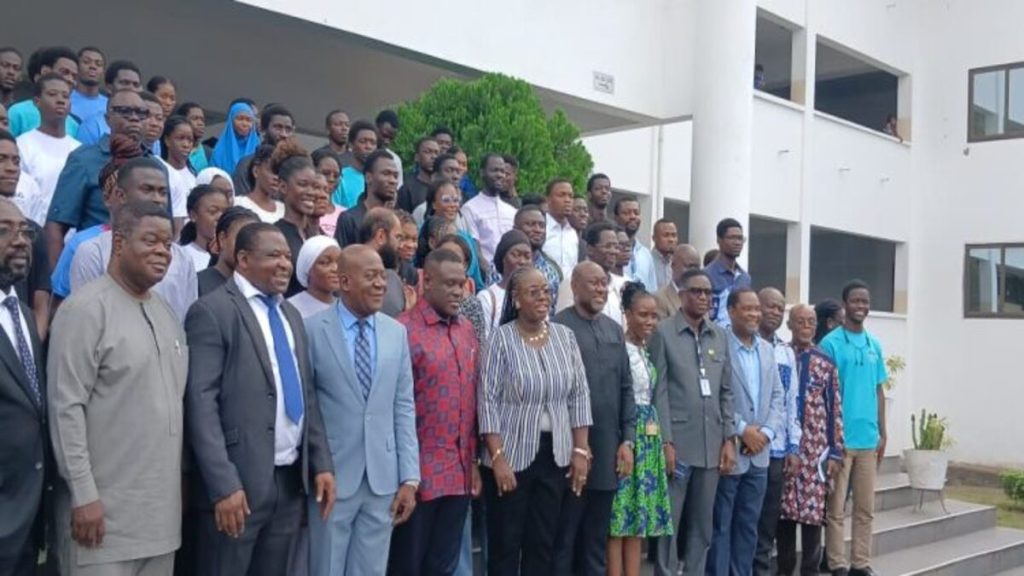
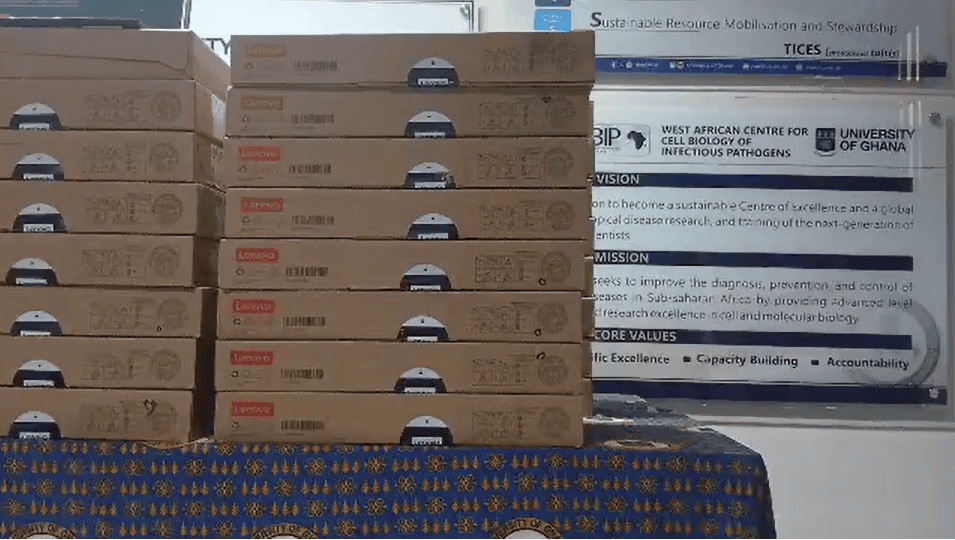
The Ministry of Communication, Digital Technology and Innovations has donated 2,000 laptops to the University of Ghana to support the implementation of the One Million Coders Programme (OMCP), a government initiative aimed at building digital skills among young people.
The donation adds to an earlier presentation of 500 laptops to the university as part of efforts to strengthen digital learning, coding education and technology skills development.
Speaking at the handover ceremony, Minister for Communication, Digital Technology and Innovations Samuel Nartey George said the initiative demonstrates the government’s commitment to preparing Ghanaian youth for opportunities in an increasingly technology-driven economy.
“This presentation demonstrates our shared commitment to equipping Ghanaian youth with the digital skills and artificial intelligence literacy needed to thrive in a technology-driven world. It follows our initial handover of 500 laptops a few weeks ago,” he said.

Mr. George commended the University of Ghana for integrating the One Million Coders Programme into its academic curriculum, describing the move as an important step towards making digital skills training a permanent part of higher education.
He said coding, data literacy and artificial intelligence competencies should no longer be viewed as optional skills but as essential foundations for modern education alongside traditional literacy and numeracy.
“The University of Ghana’s decision to weave the One Million Coders Programme permanently into its academic curriculum is an act of genuine foresight,” he said.
The minister praised the university’s leadership for institutionalising digital skills development, saying the move would ensure that future generations of students benefit from technology-focused training.
The One Million Coders Programme is one of the government’s flagship digital transformation initiatives, designed to train young Ghanaians in areas including coding, software development, artificial intelligence, cybersecurity and data analytics.
The programme aims to equip one million people with practical digital competencies to improve employability, encourage entrepreneurship and innovation, and enhance Ghana’s competitiveness in the global digital economy.


